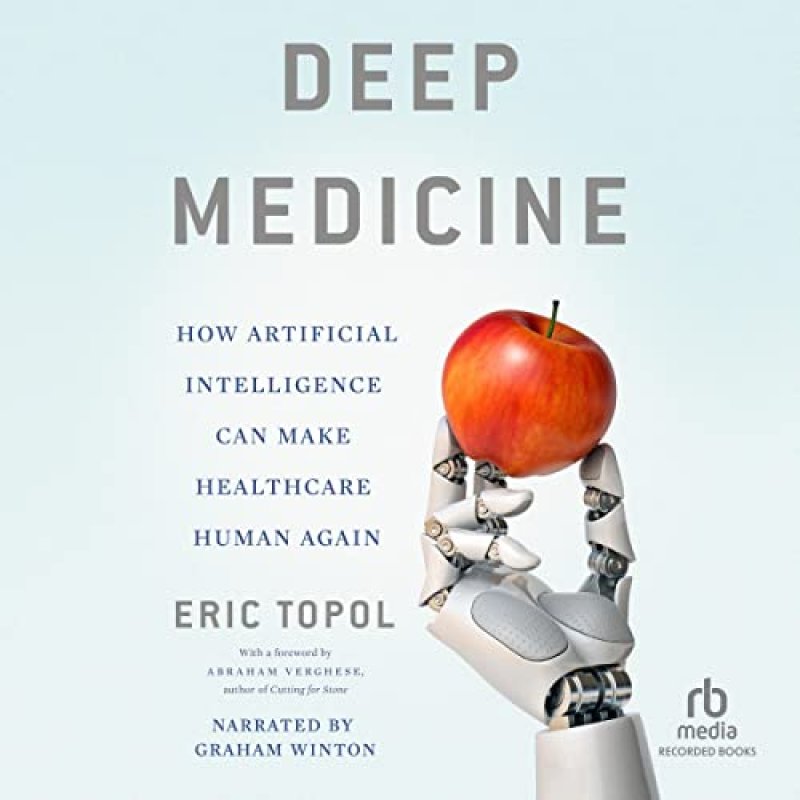
Deep Medicine: How Artificial Intelligence Can Make Healthcare Human Again
Gift type: Health & Wellbeing
Perfect pick for: Healthcare professionals, Technology enthusiasts, Thoughtful readers, Futurists, Weird but brilliant gift ideas
Estimated Price: £11.37
Medicine is at a crossroads where technology meets compassion. In Deep Medicine, renowned physician Eric Topol explores how artificial intelligence can restore the human heart to healthcare. In an era where medical professionals are overwhelmed and patient connection falters, AI promises to transform the landscape — from automating tedious tasks such as note-taking and scans to improving diagnosis and treatment accuracy.
This audiobook reveals how freeing doctors from administrative burdens can reignite meaningful doctor-patient relationships, ultimately enhancing care quality and saving lives. Provocative yet hopeful, Eric Topol offers a balanced insight into a healthcare revolution that marries technology with empathy to benefit everyone involved.
- Format: Audiobook narrated by author Eric Topol
- Category: Health & Wellbeing, focused on medicine and technology
- Length: Approximate runtime
- Publisher: Audible
- Language: English (British edition)
- Key themes: Artificial intelligence in healthcare, doctor-patient relationship, medical innovation
- Suitable for health professionals, technologists, and thoughtful patients
- SKU based on title slug: deep-medicine-ai-healthcare
Deep Medicine stands out as a meticulously researched and compelling exploration of AI’s profound impact on healthcare. Eric Topol, a leading authority on medical innovation, masterfully balances scientific rigour with accessible storytelling, making complex topics engaging for both professionals and lay readers. The audiobook's structure carefully guides listeners through the current failings of the healthcare system—such as overburdened doctors and depersonalised care—and illustrates how AI can alleviate these stressors.
👀 Read more...Listeners will appreciate Topol’s cautious optimism; he neither blindly champions technology nor dismisses its risks. Instead, the narrative underscores the potential of AI to empower physicians, improve diagnostic precision, and reduce errors, all while ultimately restoring the essential human connection that medicine demands. The clarity and passion in the author’s voice elevate the listening experience, making it not only informative but deeply thought-provoking for anyone invested in the future of health.
People also looked at…